
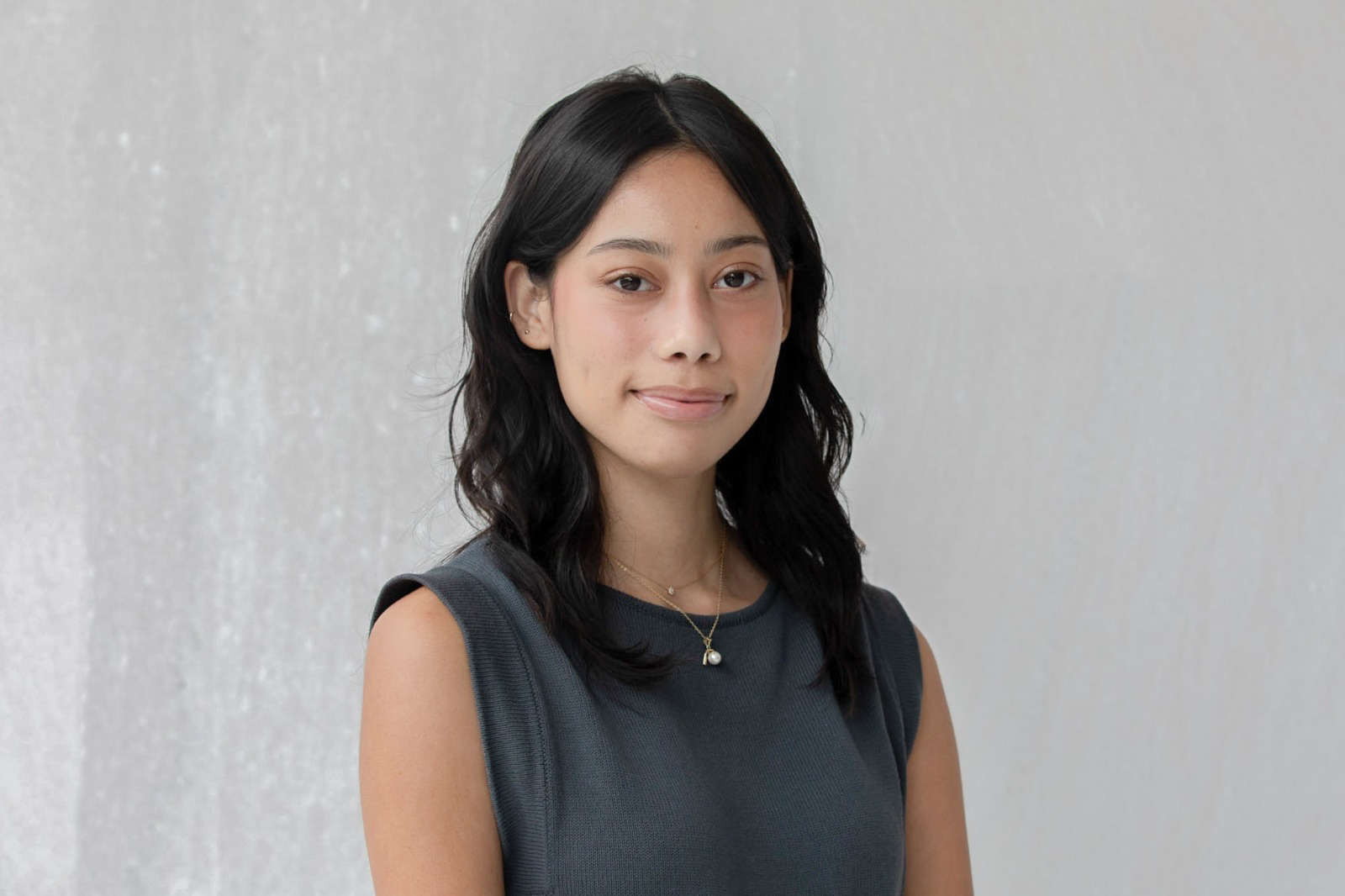
Lauren Mai: Turning International Affairs into Green Transitions
Lauren Mai, MS-EIA ‘26
Lauren Mai is an MS-EIA student with a background in international relations focusing on Southeast Asia. Over the course of her professional and academic career, she has found herself drawn to the sustainability sector, allowing her to connect her interest in regional and international policy with the global clean energy transition. “I wanted to find a [masters] program that would help me explore the intersection between Southeast Asia and renewable energy policy,” she says. “The M.S. in Environment & International Affairs program at Georgetown felt perfect – it blends international affairs and science in a way that’s rare, and it’s only one year long.”
Alongside pursuing her master’s degree, Lauren works full time as a Program Manager and Research Associate at the Center for Strategic and International Studies (CSIS) in the Southeast Asia Program, where she focuses on projects centered on renewable energy and sustainability policy. Prior to joining CSIS, Lauren spent two years at the U.S.-ASEAN Business Council, specializing in private-public sector engagement.
Blending Policy and Practice
Lauren admits that graduate school comes with a hefty price tag, but to her, it has been worth it. “I think it’s exciting and keeps me on my toes,” she says. “It’s not a repeat of undergrad – it’s very rewarding so far.”
Her years of professional experience has also given her an academic advantage. Having worked in policy, she takes a practical approach to her coursework, using an analytical and policy-oriented perspective in the classroom, especially in Program Director Dr. Marcus King’s Global Environmental Politics class. Her experience writing policy memos and briefs at CSIS helps her tackle academic assignments. “I already write a lot of policy at work, so papers and memos come naturally.”
Filling the Technical Gaps
Joining the program with a BA in International Relations from Boston University’s Pardee School of Global Studies, Lauren shares that the technical side of sustainability is where she wants to grow the most. “I’m not a science girl,” she laughs, “so I really wanted to learn the technical side of things.” Courses like Dr. Lucy Zipf’s Science of Global Environmental Challenges are helping her bridge that gap. “Dr. Zipf has made coding in R approachable and easy to learn,” she says. “I also want to pick up GIS and remote sensing,” she says, referring to the hard skills that supplement her practical understanding of climate policy and data analysis.
Balancing Act: Work, School, and Self-Care
Balancing a full-time job and graduate school is demanding, but Lauren has developed a strategy: “I’m treating the program like a sprint, not a marathon,” she says. “I’ve been frontloading my schoolwork so I can handle CSIS work as it comes in.” She has also learned the importance of rest. “If you’re constantly doing both, that’s a one-way ticket to burnout city,” she jokes. “I make sure I have one day each week where I’m doing nothing. I’d rather take one long break than a bunch of small ones.”
Learning in Real Time
Her favorite class so far? Deep Decarbonization taught by adjunct professor Colin McCormick, an elective that dives into the science behind renewable energy technologies and carbon reduction strategies. “The readings are very digestible, and it’s fascinating to finally understand the technical reasoning behind the policies I’ve worked on,” she says. Having done research on Southeast Asia’s decarbonization strategy, Lauren recognizes the importance of diving deeper into the science and technicalities behind policy.
Lauren is already applying what she learns in real time at her job: “In the very first lab class, we learned how to read scientific figures—what makes a good figure versus a bad one,” she says. “Around the same time, my team at CSIS was working on a UN voting data project. I looked at our visuals and thought, ‘You know, our figures could be better, right?’” she laughs. “I was able to help make the trends easier to see—it was an immediate, practical takeaway from class.”
Looking Ahead
As she continues through the program, Lauren feels increasingly confident about her path. “It’s really important to learn both the technical and policy sides [of global climate challenges],” she says. “That’s how we make the most informed decisions.” Her advice to future students? “This program will definitely give you an edge in environmental and international relations careers and help you find a role that combines both.”