
MS-EIA Students attend Harvard European Conference
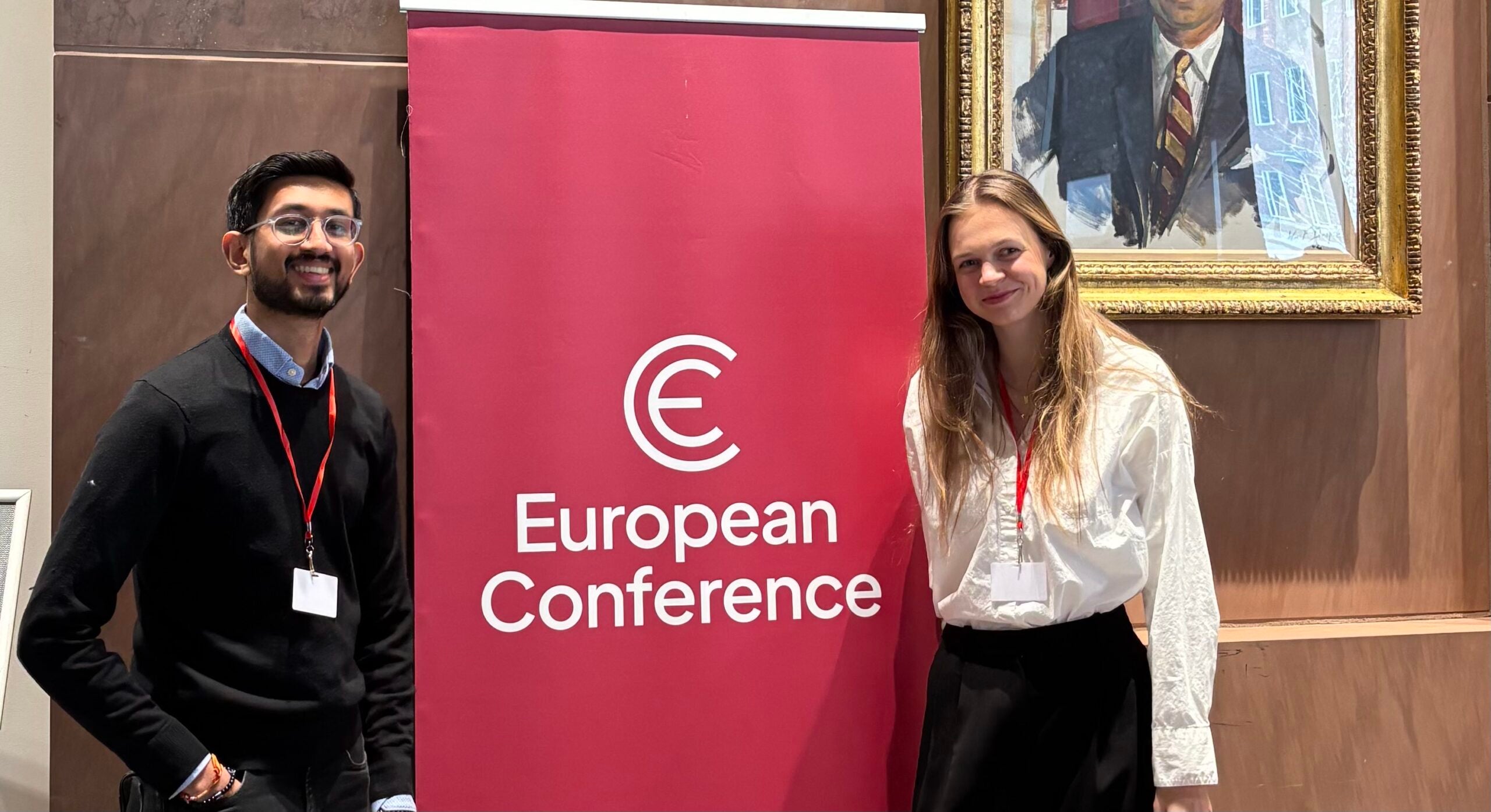
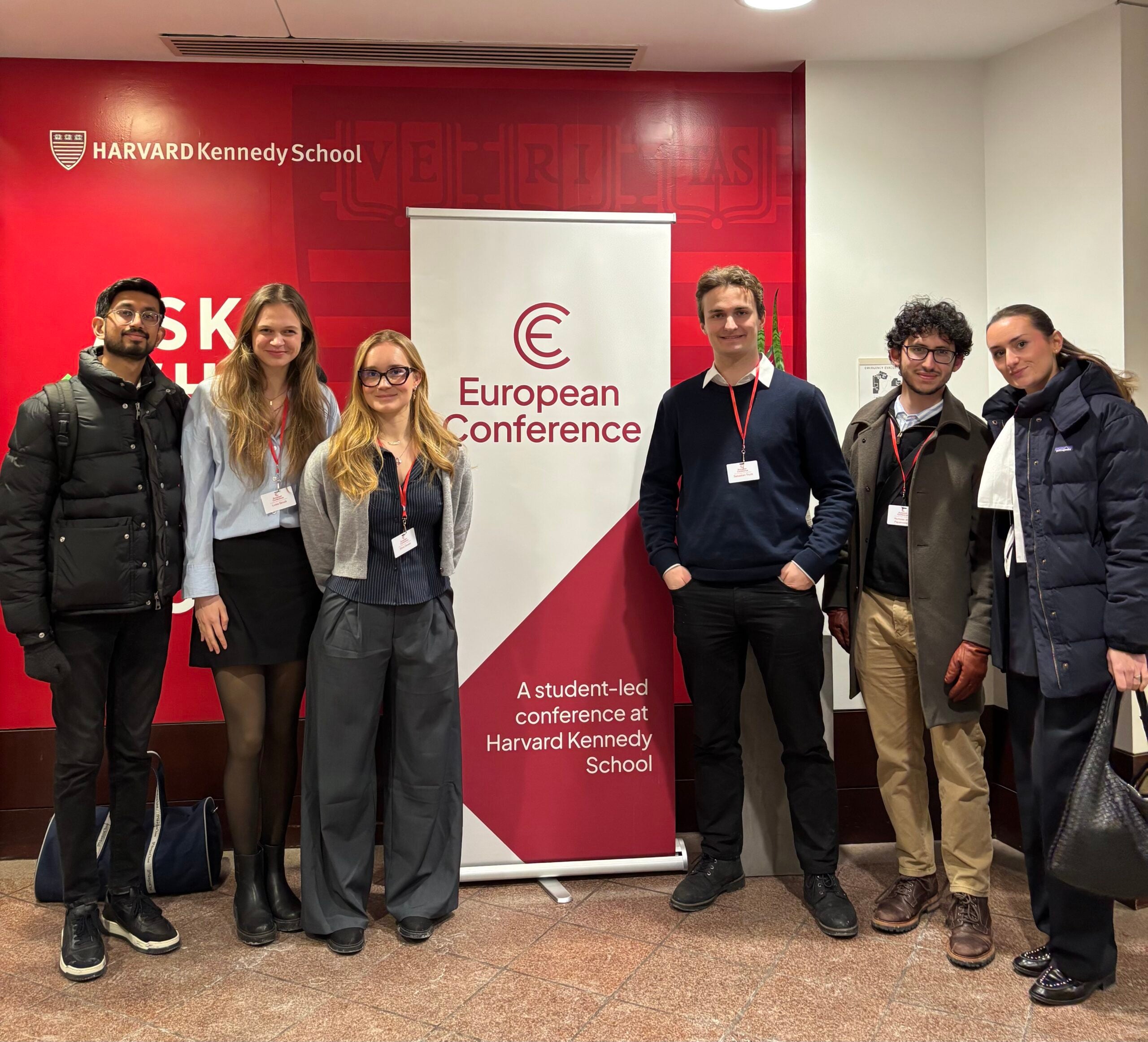
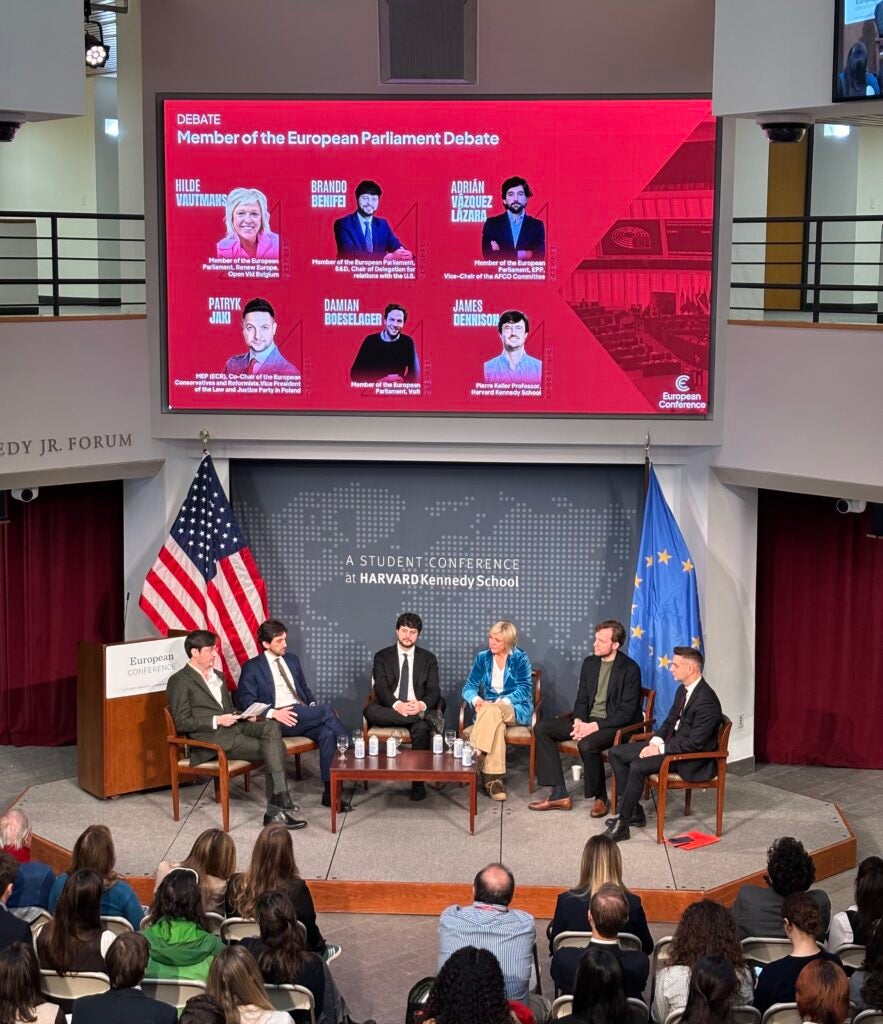
Last month, M.S. in Environment & International Affairs (MS-EIA) students Shivank Taksali and Luisa Struck had the incredible opportunity to attend the annual student-led European Conference at Harvard University, this year titled “Crisis as Catalyst: Europe’s Opportunity in a Changing World Order”, where speakers, panels, and debates sparked two days of lively discussions. Some highlights included keynote speeches from Sophie Wilmès (Vice President of the European Parliament and former Belgian Prime Minister), Luc Frieden (Luxembourg Prime Minister), and Leo Varadkar (former Irish Taoiseach). Students had the rare opportunity to engage directly with policymakers, industry experts, NGO leaders, and several ambassadors to the United States, as well as exchanging ideas with peers from other leading universities and expanding their professional networks.
As Environment & International Affairs students both concentrating in Sustainable Energy Technology and Policy, the students were particularly interested in the events surrounding energy and environmental topics. One panel was titled “Security First or Leadership First? Europe’s Strategic Energy Crossroads,” bringing together senior industry executives from a transmission system operator, an energy major, and an investment firm active in clean energy. The speakers discussed the narrative shift from “climate crisis” to “independence from fossil fuels”, particularly as the EU imports 90% of its energy, facing sovereignty challenges from slow cross-border integration and decision-making (e.g., 10–11 years to approve a battery plant that takes 2 years to build), as well as grid bottlenecks limiting RE deployment. The panel stressed regional cooperation (like North Sea power cooperation), flexible deregulation, and blended finance for competitiveness. In response to a question from MS-EIA student Luisa on European private sector influence in clean energy investments in developing nations, the speakers underlined that Europe must first invest in its own technologies before it can lead abroad, whilst building a “coalition of the willing” globally.
The second event that particularly stood out to the Environmental Politics students was a Keynote speech by Robert Habeck, the former German Vice Chancellor and Minister for Economic Affairs and Climate Action. He argued Europe’s fragmentation is its main weakness, with no united foreign, fiscal, and defense policy risking irrelevance between the U.S. and China in a divided world. Beyond democracy, populism, and rising right-wing power in German states, the talk focused on energy and the strategic weakness of relying on Russian gas, echoing the prior panel that security, not climate, now dominates energy politics.
The conference gave us a unique opportunity to connect with like-minded students across a multitude of universities looking to be the change they wish to see on the European continent. I am more hopeful about the green transition knowing that my fellow Europeans are engaging critically with the environmental issues of today and thinking deeply about the policies of tomorrow.
Shivank Taksali
Shivank and Luisa traveled back to Georgetown together after their busy weekend, and at the airport gate in Boston ran into Sophie Wilmès, the Vice President of the European Parliament and former Belgian Prime Minister, and Anniken Huitfeldt, the Ambassador of Norway to the United States. They spoke with Wilmès as they were waiting for boarding, getting personal insights into the lived experience of running an EU institution and international politics.
Europe is clearly at a decisive moment, and Luisa and Shivank have taken these conversations back to Georgetown, particularly to discuss in their elective class “Environmental Policy in Europe” taught by Max Gruenig in the School of Foreign Service. This one-semester class has exposed the students to the stages of EU policymaking, the inner workings of European institutions, and the legal instruments of key European environmental policies including the European Green Deal, ETS 1 and 2, CBAM, and the Net-Zero Industry Act.
The class demystifies how EU institutions actually make and implement policy. Understanding these real‑world mechanisms has helped me see how I might want to contribute professionally to the energy transition and climate governance in Europe.
Luisa Struck
By attending the Harvard European Conference, the academic overview of European policymaking was brought to life, and students were able to connect the theoretical knowledge from their Georgetown education to the realities of global governance and current events. These interactions also helped students envision how their own skills and interests could contribute to future work in energy policy and diplomacy as the MS-EIA students join in shaping the next generation of climate and energy leaders.